
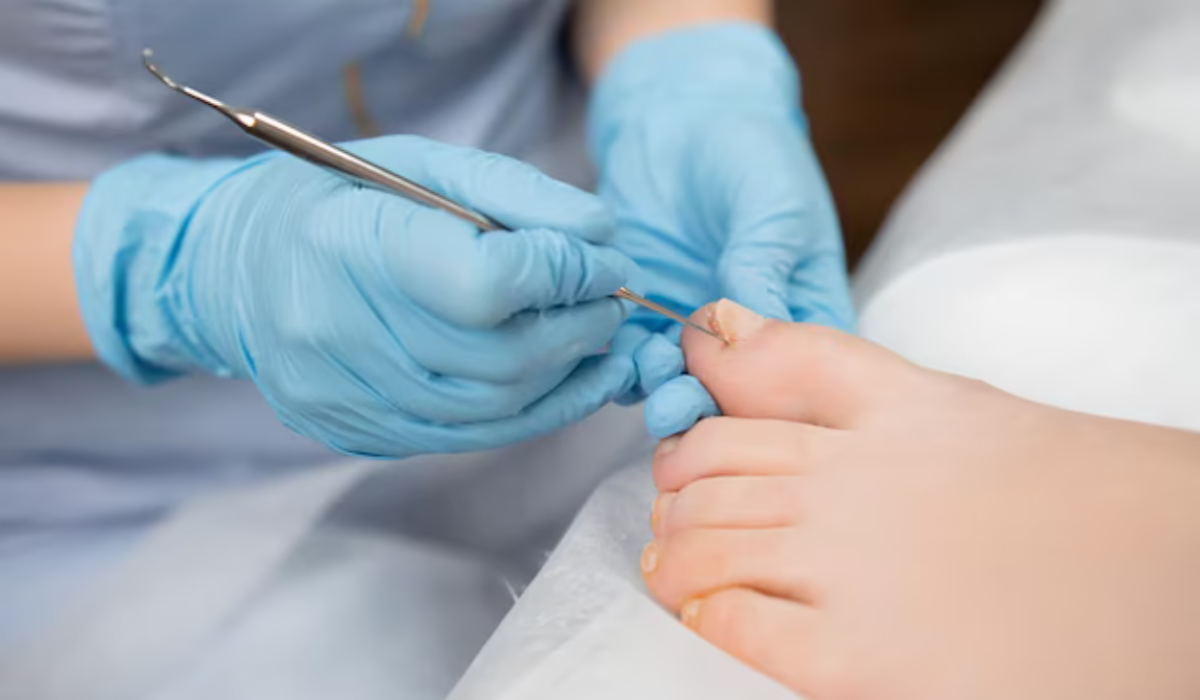
Ingrown toenails are very common; in fact, ingrown toenail surgery is one of the most common surgical procedures carried out in Australia.
Causes – Ingrown toenails can occur for many reasons, including poor nail cutting. However, the most common cause is having a nail that is too curved. This excess curvature is known as an involuted nail.
The nail should ideally grow on top of the skin with the edge of the nail sitting comfortably against the surrounding tissue. When the nail is excessively curved, it tends to dig in and can eventually pierce the skin leading to pain. A secondary infection can result, markedly increasing the pain and swelling.
Traditional and new procedure – The most common procedure carried out to treat an ingrown nail is still a “wedge resection”. The “wedge resection” can work well, but it often involves surgery carried out in a hospital and results in the need for stitches, which can be quite painful.
There is now an improved and less invasive procedure. Known as a partial nail avulsion with phenolisation (PNA), it can be carried out under local anaesthetic in the podiatry chair, offering excellent results.
If done by a skilled practitioner, the toe should be completely numb, with no pain at all during and after the procedure. The chemical phenol that is used to stop the offending section of the nail from regrowing has a great secondary effect of cauterising the nerve endings in that region, leading to no post-operative pain, quick recovery and long-term results.
Our podiatrists at Sydney’s Bio Podiatry are experienced and skilled at carrying out the PNA, so make your appointment today.
Read more articles about foot and ankle conditions